
Spartan
A Memoir
I was six years old the first time I saw him.
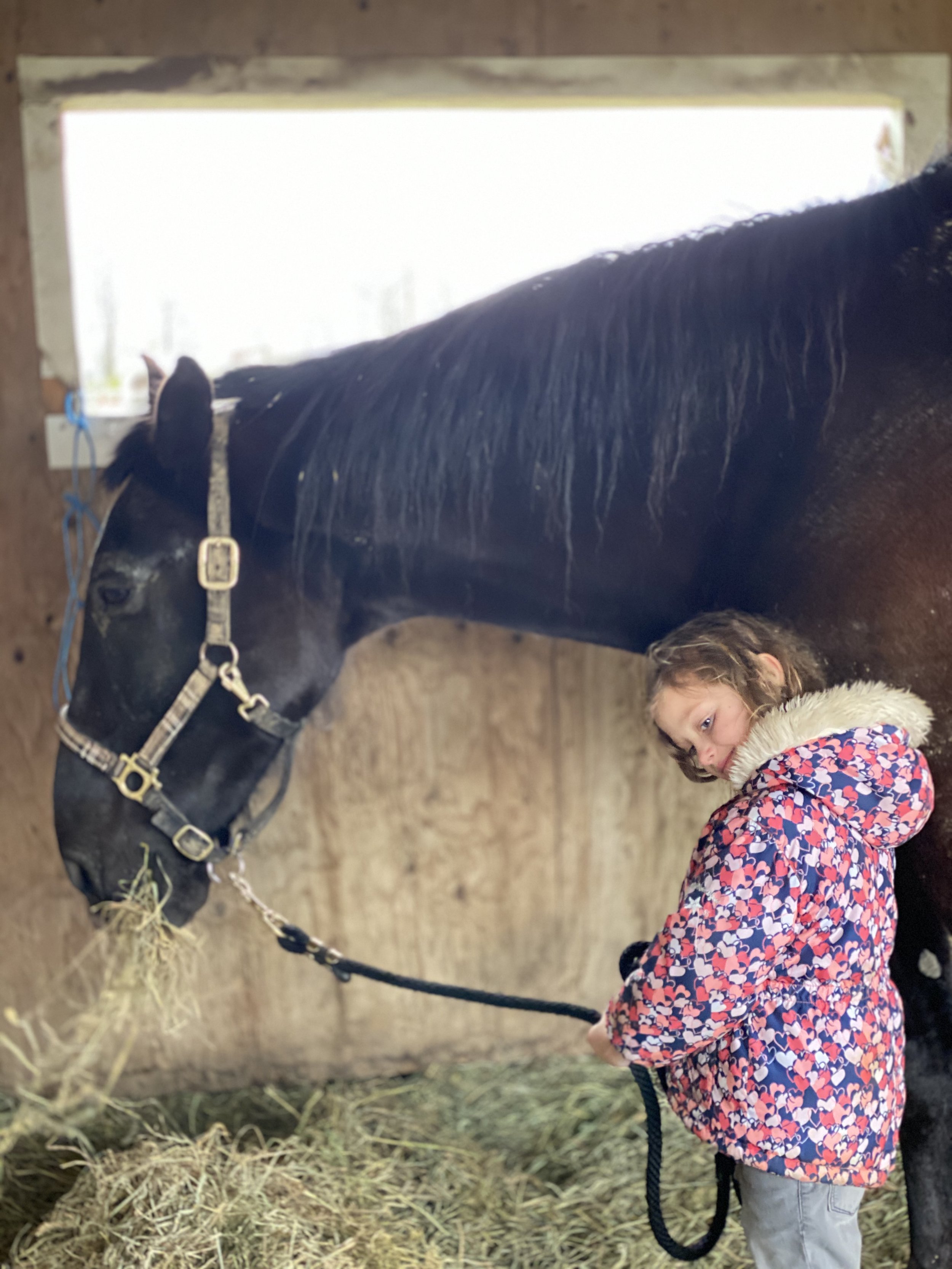
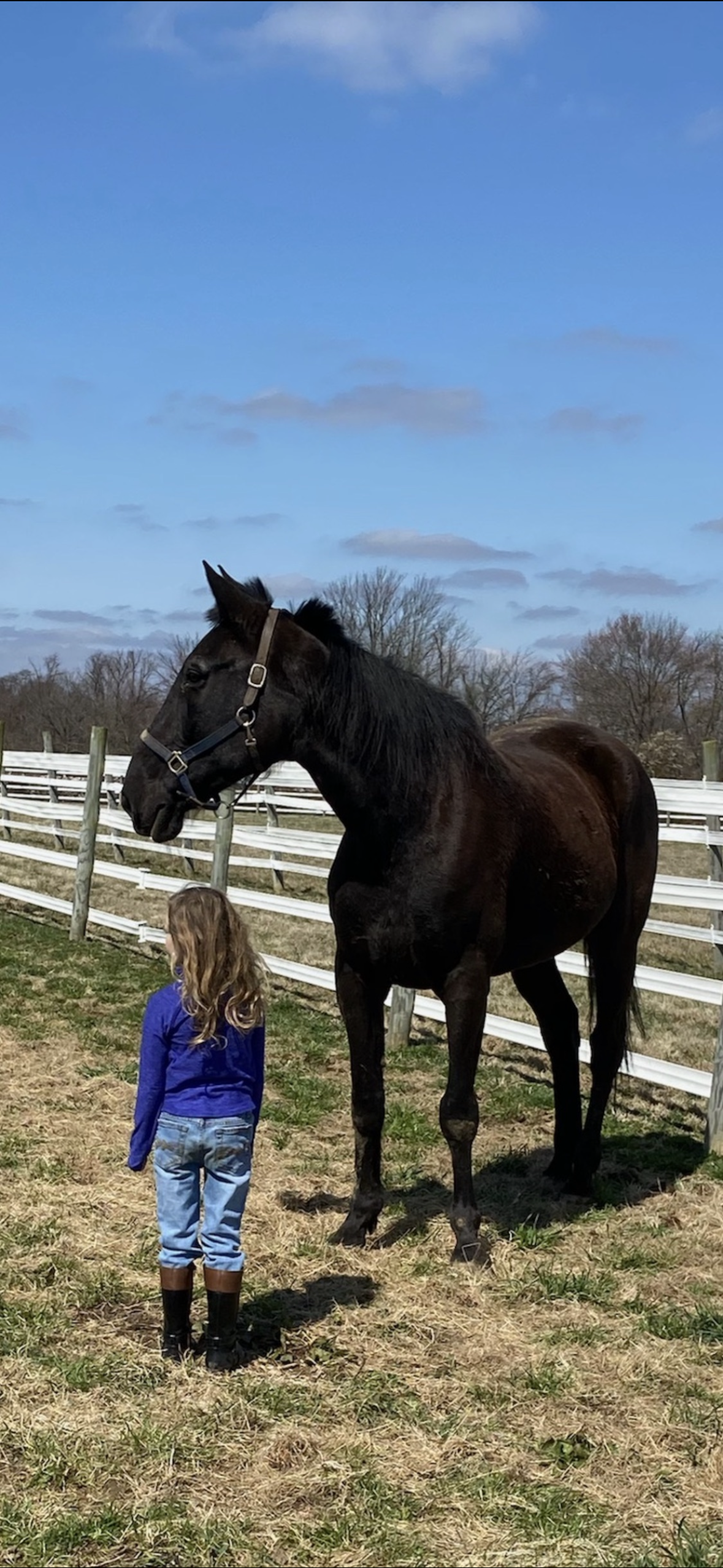
He was enormous — seventeen hands of jet-black muscle and attitude. He stomped. He snorted. He wanted back in his field. Adults stood at a careful distance, speaking in quiet tones about how powerful he was, how unsure he still felt, how he didn’t trust easily.
I didn’t understand all of that then.
I just saw him.
They told me his name was Spartan. They told me he had been saved from a slaughter pen. That he had been part of something called a Freedom Ride with the Standardbred Retirement Foundation. Fifty-seven horses rescued at once. Fifty-seven lives that almost ended.
He was one of them.
What I didn’t know that day — what I would only come to understand later — was that Spartan had been born for greatness. His grandsire was No Nukes, a Hall of Fame harness racing legend. Spartan had the bloodlines of a champion. Somewhere along the way, though, his registration was never completed. He slipped through the cracks. Without papers, without protection, without value in the eyes of the industry that created him.
He had been bounced around. Undernourished. Worked hard pulling carts until one day he collapsed. And when his body gave out, he wasn’t rewarded with rest.
He was sold.
Sold into the slaughter pipeline.
By the time I met him, his body had been restored. Standardbred Retirement Foundation had brought his weight back up. They had corrected his hooves. They had given him food, routine, and medical care. But trust? That was still missing.
Three adoptions had already fallen through. He simply would not trust people outside of his handlers.
Then there was me.
I remember walking toward the barn that day. I wasn’t afraid. I don’t know why. Maybe children don’t see danger the way adults do. Maybe I just believed that if I loved him, he would know.
He stomped again when I entered the barn. His ears were alert, his body tense. The adults held their breath.
I walked right up to him.
And he stopped.
He lowered his giant head down to my level, as if he had been waiting for me. I reached out my little hand with a carrot. I told him softly that it was okay. I told him I would give him the life he always deserved — one filled with love and kindness.
He took the carrot gently.
Then he dropped his head even lower.
That was the moment everything changed.
He didn’t trust adults at first. I could see it in his eyes. But when I was there, something softened in him. If I stood beside him, he stood still. If I spoke, he listened.
Over time, he began to believe.
And so did I.
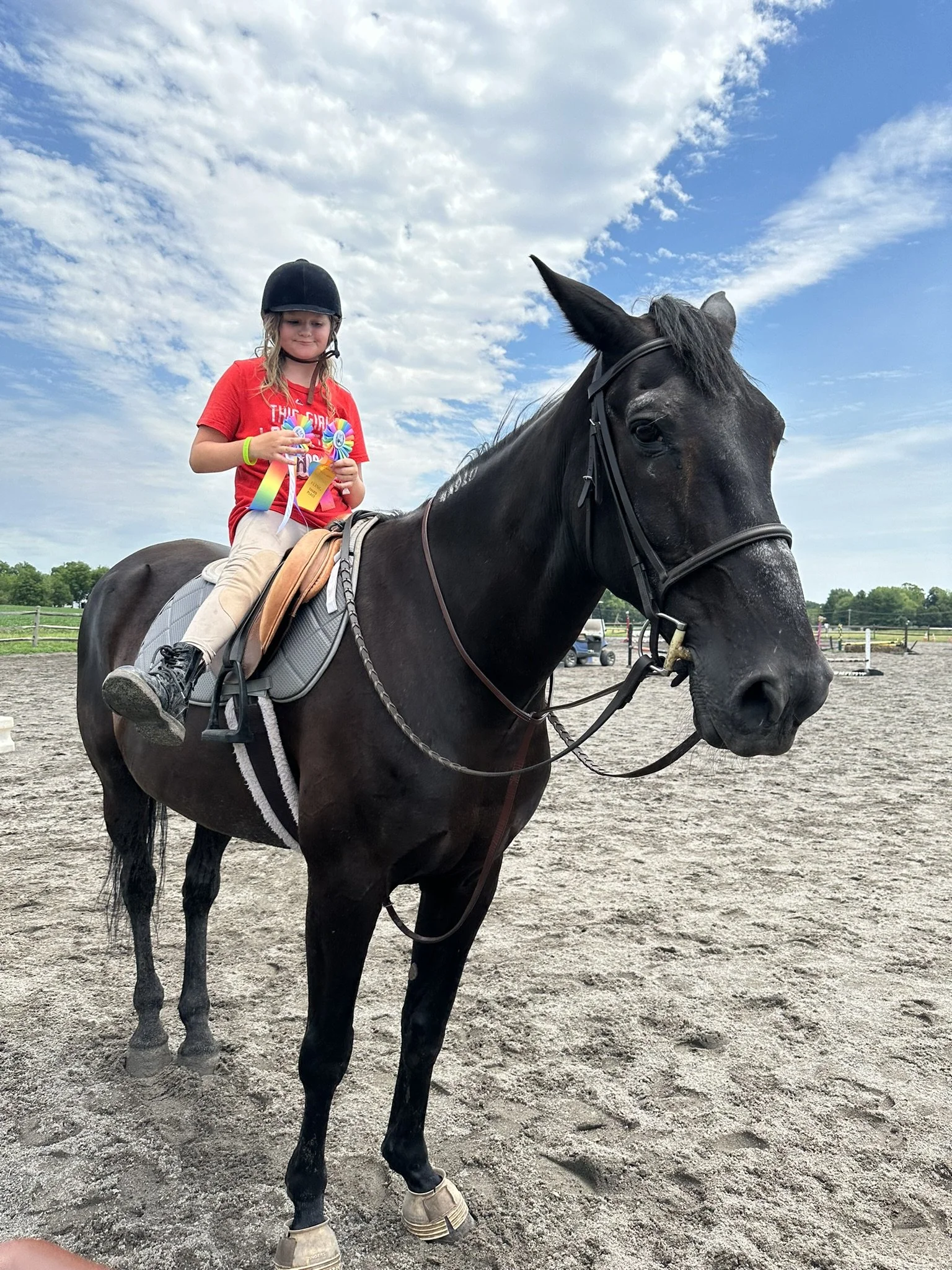
We learned everything together. How to trot in rhythm. How to canter without fear. How to jump. He would follow me anywhere — with or without a lead rope. Sometimes I would walk away just to see if he would come.
He always did.
But none of it would have been possible without my family.
My mom saw something in Spartan the way I did. When others saw risk, she saw redemption. When adoptions fell through and doubts lingered, she fought for us — for me and for him. It took courage to stand behind a little girl and a seventeen-hand horse with a painful past. It took faith to believe that love could overcome fear. My mom never wavered. She carried the weight of the hard decisions. She asked the hard questions. She made sure Spartan was safe, and she made sure I was too.
And my grandmother — she has always been one of my greatest teachers. She taught me that horses are never just horses. They are mirrors. They are partners. They are honest in ways people sometimes aren’t. From her, I learned patience. Feel. Timing. Respect. She helped me understand Spartan, not just love him. She continues to shape the horsewoman I am becoming.
For five years, Spartan and I were inseparable. He wasn’t just my horse. He was my safe place. My teacher. My protector. My best friend.
People saw a big, powerful Standardbred. I saw the horse who had once lost faith in humanity and chose to try again.
Then came the day everything changed.
He colicked.
The pain came fast and hard. The veterinarian tried everything. Medications. Fluids. Every possible intervention. But there was also a small tumor in his belly — something we didn’t know was there until it was too late.
I remember barely being able to see through my tears. I remember holding his head as he struggled. I remember begging him to stay.
On the hill at the farm — the place where he had finally known peace — he began to collapse.
I held his head in my lap as he took his last breath.
I was eleven years old.
I stayed with him for more than eight hours. I couldn’t leave him there alone. The November rain was cold and steady, soaking through the blanket I laid over us. I pressed my face into his neck and memorized everything — the shape of him, the smell of him, the silence after his breathing stopped.
That day carved something into me.
Grief, yes.
But also purpose.
I promised him that I would save his friends. That his life would matter beyond those five years with me. That the horse who had been bred for greatness and nearly slaughtered would leave behind something greater than tragedy.
Almost a year later, with the guidance and support of the Standardbred Retirement Foundation — and with the unwavering strength of my family beside me — I launched Grace Beyond the Track, Incorporated.
I didn’t care that I was young.
Spartan had taught me that broken things can learn to trust again. That lives deemed disposable are still worthy of love. That one connection can rewrite a future.
Spartan was a seventeen-hand jet-black Standardbred pulled from a kill pen. But he was also the horse who lowered his head to a little girl and decided to try one more time.
He was saved from slaughter.
And in saving him, he saved me.
Now, every Standardbred we fight for carries a piece of him forward. Every life we touch is part of the promise I made in the rain.
Spartan’s story did not end on that hill.
It lives on every time a Standardbred is given the chance to receive Grace Beyond the Track.